Herbal tea · Europe
Linden Flower (Lime Blossom)
Beloved European flower tea with honey-sweet fragrance, traditionally used for calming the mind and soothing restless sleep.
 How to brew
| Leaf | Water | Temperature | Time | Infusions | |
|---|---|---|---|---|---|
| Western | 2 g | 250 ml | 90°C / 194°F | 7 min | 2 |
About this tea
Linden flower tea, known as tilleul in France and Lindenblütentee in Germany, comes from the fragrant blossoms of the linden tree (Tilia species) and has been a cornerstone of European herbal medicine for centuries. When linden trees bloom in early summer, entire streets become perfumed with their intoxicating honey-like fragrance, and the flowers are carefully harvested for drying. European herbalists have written about the blossoms since medieval times. In France, it remains one of the most popular herbal infusions, traditionally served after dinner.
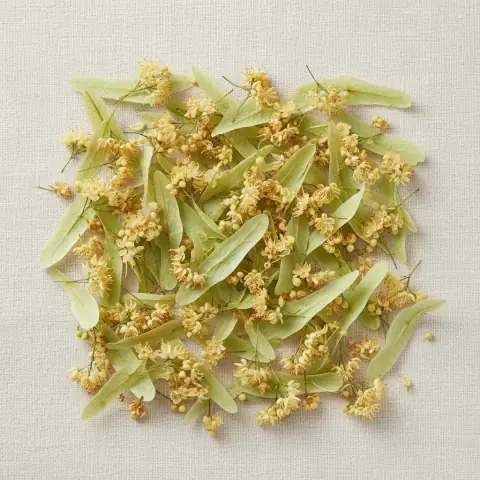
Linden trees, also called lime trees (unrelated to the citrus fruit) or basswood, can live for hundreds of years and have deep cultural significance across Europe. The flowers are harvested with their distinctive pale green bracts (wing-like leaves) attached, which contribute to both flavor and aroma. The harvest window is brief - only about two weeks when the flowers are freshly opened. Quality linden shows intact, pale yellow flowers with attached bracts, releasing sweet fragrance when handled. European linden (Tilia europaea, T. cordata, T. platyphyllos) is considered superior to American varieties.
The flavor profile is delicately floral and honey-sweet: immediately recognizable honey notes with subtle vanilla undertones and a gentle, calming quality. There's a slight mucilaginous texture that coats the palate. Unlike stronger medicinal herbs, linden is pleasant enough for daily enjoyment, with no bitterness or harsh edges. The pale golden liquor releases an intoxicating floral aroma that begins the relaxation process before the first sip.
Brewing recommendations: Use 1-2 teaspoons (2g) dried flowers per 250ml cup with water at 90°C (194°F) - slightly below boiling to preserve the delicate floral volatiles. Steep covered for 7 minutes to capture the aromatic oils. Can be re-steeped once for a lighter second cup. Traditional European preparation often adds a spoonful of honey to enhance the natural sweetness. Combines beautifully with chamomile or lavender. Best enjoyed in the evening or before bed.
A fixture of the European evening table for centuries, and in Germany a familiar cup at children's bedtimes. The gentle nature makes it safe for most people, including the elderly and children. Avoid excessive consumption during pregnancy. Pairs wonderfully with honey cakes, light pastries, and quiet evening rituals. A taste of European tradition and natural tranquility.
Caffeine, in context
Per 250 ml cup, brewed as directed.
Flavor profile
- floral
- honey-like
- delicate
- slightly sweet
Health benefits
- calming
- sleep aid
- stress relief
- respiratory health
Pairs wonderfully with
- honey
- lemon
- light cookies
- evening relaxation
You might also enjoy


Frequently asked questions
Can you re-steep Linden Flower (Lime Blossom)?
Yes — Linden Flower (Lime Blossom) gives 2 good infusions. Start at 420 seconds and add a little time to each round.
How much caffeine is in Linden Flower (Lime Blossom)?
0 mg per 250 ml cup — Caffeine-free.
What water temperature does Linden Flower (Lime Blossom) need?
90°C / 194°F. Hotter water pulls out bitterness; cooler water under-extracts the leaf.
Teafinity times every infusion for you
The app loads this tea's exact schedule, rings even in your pocket, and logs every session — free on iPhone and Android.