Herbal tea · India
Ginger
Spicy and warming herbal tea made from fresh or dried ginger root.
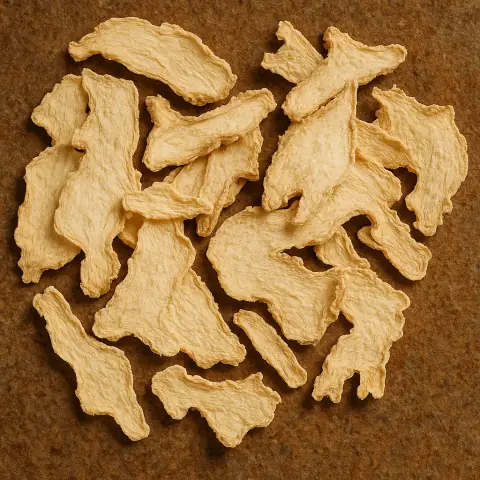
 How to brew
| Leaf | Water | Temperature | Time | Infusions | |
|---|---|---|---|---|---|
| Western | 5 g | 250 ml | 100°C / 212°F | 10 min | 3 |
About this tea
Ginger (Zingiber officinale) has warmed and flavoured food for over 5,000 years, originating in Southeast Asia before spreading globally through ancient trade routes. Chinese philosopher Confucius ate ginger with every meal, while medieval Europeans valued it as highly as black pepper. The 'root' is actually a rhizome - an underground stem that stores the plant's fierce energy. India and China remain the largest producers.
Fresh ginger offers the most vibrant flavor, while dried provides concentrated heat. The rhizomes contain gingerols (which convert to shogaols when dried), creating the characteristic spicy-hot sensation. Young ginger, harvested early, provides milder, juicier flesh, while mature ginger delivers intense heat. Quality dried ginger should smell pungent and show a light tan color without dark spots.
The flavor profile is complex and fiery: initial sweetness quickly gives way to building heat that warms from throat to belly. Fresh ginger offers bright, lemony notes alongside the heat, while dried ginger provides deeper, more concentrated warmth. The spiciness differs from chili - it's aromatic and warming rather than burning. The pale golden liquor releases steam that can make eyes water and sinuses clear.
Brewing recommendations: For fresh ginger, use 1 tablespoon thinly sliced or grated root (5g) per 250ml cup. For dried, use 1 teaspoon (2g). Pour boiling water (100°C/212°F) and steep 10 minutes. Add honey and lemon for a classic combination. For extra strength, simmer fresh ginger for 20 minutes. Can be re-steeped with longer brewing time.
A classic cup on a cold day, and one of the oldest warming drinks there is. Best enjoyed when the weather turns. Pairs with honey, lemon, turmeric, and other warming spices. In winter, add whiskey for a toddy. Avoid excessive amounts if prone to heartburn. Pregnant women should consult a doctor before drinking it regularly.
Caffeine, in context
Per 250 ml cup, brewed as directed.
Flavor profile
- spicy
- warming
- zesty
- invigorating
Health benefits
- digestion
- nausea relief
- anti-inflammatory
- immune boost
Pairs wonderfully with
- honey
- lemon
- Asian food
- breakfast
You might also enjoy

Frequently asked questions
Can you re-steep Ginger?
Yes — Ginger gives 3 good infusions. Start at 600 seconds and add a little time to each round.
How much caffeine is in Ginger?
0 mg per 250 ml cup — Caffeine-free.
What water temperature does Ginger need?
100°C / 212°F. Hotter water pulls out bitterness; cooler water under-extracts the leaf.
Teafinity times every infusion for you
The app loads this tea's exact schedule, rings even in your pocket, and logs every session — free on iPhone and Android.