Pu-erh tea · Yunnan, China
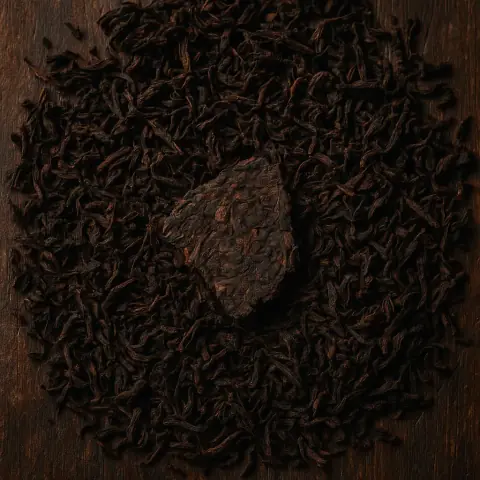
Shou Pu-erh (Ripe)
Aged and fermented dark tea with earthy, smooth flavor and deep reddish-brown color.
 How to brew
| Leaf | Water | Temperature | Time | Infusions | |
|---|---|---|---|---|---|
| Western | 3 g | 250 ml | 100°C / 212°F | 1 min | 4 |
| Gong Fu | 6 g | 100 ml | 100°C / 212°F | 10 s + | 10 |
About this tea
Shou (ripe or cooked) Pu-erh represents a modern innovation in ancient tea tradition, developed in 1973 at Kunming Tea Factory to meet demand for aged tea flavors without the decades-long wait. This accelerated fermentation process, called 'wo dui' (wet piling), mimics natural aging through controlled microbial fermentation, creating in months what traditionally took decades.
The production process is fascinating: after initial processing, maocha (raw pu-erh material) is piled, moistened, and covered, creating conditions for beneficial microorganisms to transform the tea. Temperature and humidity are carefully monitored as the pile ferments for 45-60 days, turned regularly to ensure even fermentation. The tea is then dried and often compressed into cakes (bing), bricks (zhuan), or other traditional shapes. This process creates entirely new compounds not found in other teas.
The flavor profile is unique and polarizing: deep, earthy notes reminiscent of forest floor, mushrooms, and rich soil dominate. Well-made shou exhibits smooth, thick texture with no astringency, sweet undertones of dates or dark molasses, and what Chinese tasters call 'chen wei' (aged flavor). Poor quality shou can taste fishy or moldy, while premium versions offer complex layers of dark chocolate, leather, and minerals. The liquor is deep burgundy to coffee-black.
Brewing recommendations: Rinse leaves with boiling water for 5-10 seconds to awaken them and remove any storage flavors. Use 1 tablespoon (5g) per 250ml cup with boiling water (100°C/212°F), steeping for 1 minute. For gongfu style, use 5-8g per 100ml, steeping 20-30 seconds initially. Can yield 10-20 infusions. Shou pu-erh is very forgiving and won't become bitter with long steeping.
Traditionally drunk after heavy meals in China for its digestive properties. Scientific studies suggest benefits for cholesterol reduction and weight management. Best enjoyed without additions to appreciate its complexity. Pairs excellently with dim sum, rich meats, and dark chocolate. Many drink it daily as a health tonic. The earthy character makes it an acquired taste that often becomes an obsession.
Caffeine, in context
Per 250 ml cup, brewed as directed.
Flavor profile
- earthy
- smooth
- woody
- mushroom
Health benefits
- digestion
- cholesterol
- weight management
- probiotics
Pairs wonderfully with
- rich foods
- dim sum
- dark chocolate
- nuts
You might also enjoy



Frequently asked questions
Can you re-steep Shou Pu-erh (Ripe)?
Yes — Shou Pu-erh (Ripe) gives 10 good infusions. Start at 10 seconds and add a little time to each round.
How much caffeine is in Shou Pu-erh (Ripe)?
30 mg per 250 ml cup — Medium caffeine.
What water temperature does Shou Pu-erh (Ripe) need?
100°C / 212°F. Hotter water pulls out bitterness; cooler water under-extracts the leaf.
Teafinity times every infusion for you
The app loads this tea's exact schedule, rings even in your pocket, and logs every session — free on iPhone and Android.