Pu-erh tea · Yunnan, China
Sheng Pu-erh (Raw)
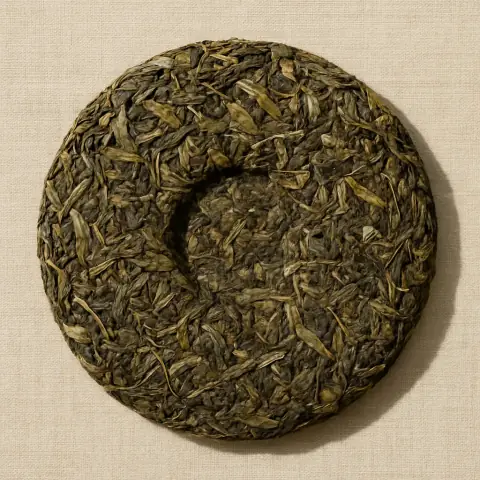
Young raw pu-erh with bright, slightly astringent character that mellows with age.
 How to brew
| Leaf | Water | Temperature | Time | Infusions | |
|---|---|---|---|---|---|
| Western | 2.5 g | 250 ml | 90°C / 195°F | 45 s | 4 |
| Gong Fu | 5 g | 100 ml | 90°C / 195°F | 10 s + | 12 |
About this tea
Sheng (raw or green) Pu-erh represents the original form of pu-erh tea, with a history stretching back over 1,700 years to the Tang Dynasty. Unlike shou pu-erh's accelerated fermentation, sheng undergoes slow, natural microbial transformation over years or decades, making it the wine of the tea world - improving with age under proper storage conditions.
Production follows traditional methods: large-leaf tea from ancient trees in Yunnan is withered, pan-fired to halt oxidation (but at lower temperatures than green tea, allowing enzymes to remain active), rolled, and sun-dried into maocha. This is then often compressed into various shapes - cakes, bricks, or tuos - using stone presses. The compression aids aging by creating micro-environments within the tea. Young sheng from ancient trees in famous regions like Bulang, Yiwu, or Lao Banzhang command premium prices.
The flavor profile evolves dramatically with age: young sheng (1-5 years) is bright, astringent, and powerful with notes of hay, honey, and stone fruits, sometimes with pleasant bitterness that transforms to sweetness ('hui gan'). As it ages, astringency mellows into smooth complexity - 10-year sheng shows darker fruit notes, 20-year develops leather and herbs, while 30+ year vintage sheng achieves transcendent complexity with camphor, traditional medicine, and profound sweetness. The liquor progresses from pale yellow to deep amber.
Brewing recommendations: Young sheng requires careful brewing - use 1 teaspoon (4g) per 250ml cup with water at 90°C (195°F), steeping for 45 seconds to manage astringency. For gongfu style, use 5-7g per 100ml with short steeps (10-20 seconds). Aged sheng can handle boiling water. High-quality sheng can yield 15-25 infusions. Rinse once before drinking.
Best appreciated through gongfu brewing to experience its complexity. Young sheng pairs with light foods and can refresh the palate, while aged sheng is meditative, best enjoyed alone or with nuts and dried fruits. Storage is crucial - proper humidity and ventilation create better aging. Collecting and aging sheng pu-erh has become an investment strategy in Asia, with vintage cakes selling for thousands of dollars.
Caffeine, in context
Per 250 ml cup, brewed as directed.
Flavor profile
- fresh
- slightly astringent
- vegetal
- honey notes
Health benefits
- antioxidants
- energy
- mental clarity
- metabolism
Pairs wonderfully with
- light meals
- fresh fruit
- honey
- Asian cuisine
You might also enjoy


Frequently asked questions
Can you re-steep Sheng Pu-erh (Raw)?
Yes — Sheng Pu-erh (Raw) gives 12 good infusions. Start at 10 seconds and add a little time to each round.
How much caffeine is in Sheng Pu-erh (Raw)?
35 mg per 250 ml cup — Medium caffeine.
What water temperature does Sheng Pu-erh (Raw) need?
90°C / 195°F. Hotter water pulls out bitterness; cooler water under-extracts the leaf.
Teafinity times every infusion for you
The app loads this tea's exact schedule, rings even in your pocket, and logs every session — free on iPhone and Android.