Herbal tea · Mediterranean
Sage
Mediterranean herb with earthy, slightly peppery flavor, traditionally used for mental clarity.
 How to brew
| Leaf | Water | Temperature | Time | Infusions | |
|---|---|---|---|---|---|
| Western | 1 g | 250 ml | 85°C / 185°F | 4 min | 1 |
About this tea
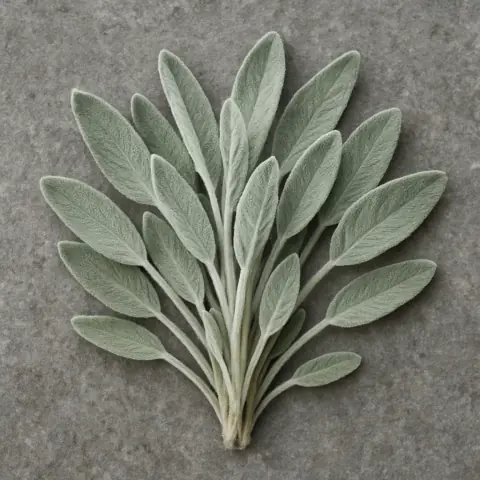
Sage (Salvia officinalis), whose name means 'to save' in Latin, earned medieval praise: 'Why should a man die who has sage in his garden?' This Mediterranean native was sacred to Romans and fundamental to monastic medicine. Its old association with memory and wisdom persists in the name itself. The silvery-green leaves with their distinctive pebbly texture have flavored foods across cultures.
The volatile oils peak just before flowering, making this the ideal harvest time. Traditional drying preserves essential oils including thujone, camphor, and rosmarinic acid. Quality sage shows intact gray-green leaves with strong, penetrating aroma. Rubbed sage, common in stores, loses potency faster than whole leaves. Garden sage differs from white sage (used for smudging) or clary sage.
The flavor profile is boldly herbaceous: earthy and slightly bitter with peppery, camphor-like notes. There's astringency that dries the mouth and a warming quality. Some detect hints of eucalyptus or pine. The flavor intensifies with steeping, becoming quite strong. Fresh sage is brighter; dried concentrates the earthiness. The pale green-yellow liquor has medium body with penetrating herbal aroma.
Brewing recommendations: Use sparingly - 1/2 teaspoon (1g) dried leaves per 250ml cup. Pour water at 85°C (185°F) and steep 4 minutes only. Longer steeping brings excessive bitterness. Often better combined with other herbs than alone. Honey balances the strong flavor. Traditional preparation includes lemon.
The word 'sage' meaning wise and the herb share a root, and the pun has been made for centuries. Avoid therapeutic doses during pregnancy or with seizure disorders due to thujone. Best as an occasional cup rather than a daily one. Pairs with rich foods in cooking. The strong flavor demands respect - this is a herb that will dominate anything it meets.
Caffeine, in context
Per 250 ml cup, brewed as directed.
Flavor profile
- earthy
- savory
- slightly bitter
- herbaceous
Health benefits
- mental clarity
- anti-inflammatory
- memory
Pairs wonderfully with
- honey
- lemon
- savory foods
- meditation
You might also enjoy

Frequently asked questions
Can you re-steep Sage?
No — Sage gives one infusion. Use fresh leaf for the next cup.
How much caffeine is in Sage?
0 mg per 250 ml cup — Caffeine-free.
What water temperature does Sage need?
85°C / 185°F. Hotter water pulls out bitterness; cooler water under-extracts the leaf.
Teafinity times every infusion for you
The app loads this tea's exact schedule, rings even in your pocket, and logs every session — free on iPhone and Android.